
Advantages And Disadvantages Of Gadgets For Students
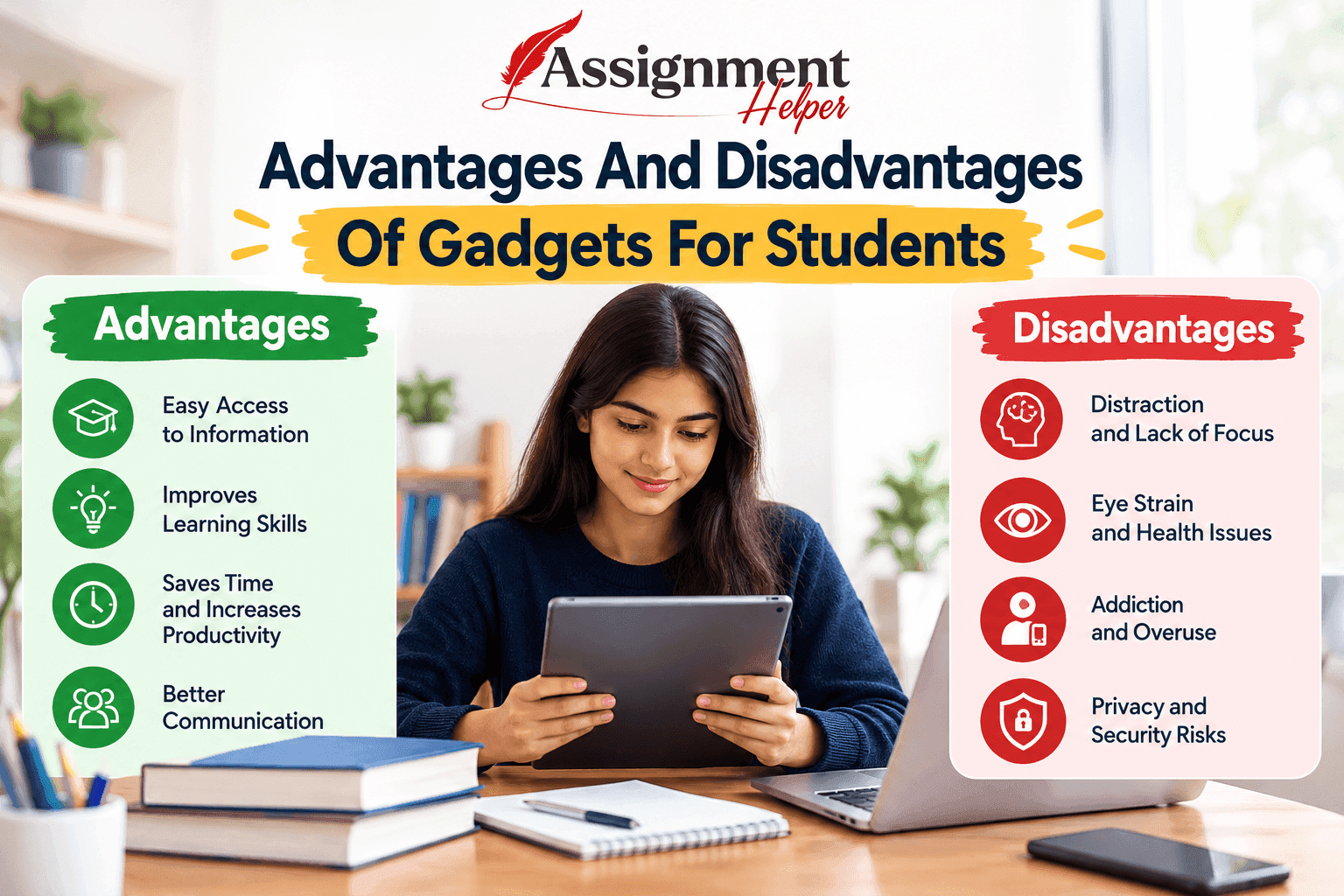
You’ve probably sat down to study, picked up your phone “for a second” to check one thing, and looked up forty minutes later wondering where the evening went. That’s the deal with gadgets for students now, which is super useful and sneaky at the same time. So let’s talk about what they actually do for students and how to keep the balance in your favour.
What Are the Advantages of Gadgets for Students?
The first advantage of gadgets is the speed of learning. Let’s say you are confused about something at 11 pm. A quick search on YouTube for an explainer video, and the doubt is cleared. In the past, you would have to wait till the next day and depend on your teacher’s availability. Textbooks still matter, but they’re not the only door to knowledge anymore.
Secondly, in a classroom, following a lesson can result in difficulties and confusion. In these cases, recorded lectures and applications allow students to rewind the lesson as much as they want without being looked at in annoyance.
Electronic devices also assist in organising things. Calendar notifications, synchronised notes on your PC, and cloud storage provide you with peace of mind about losing an entire semester’s achievements due to the malfunction of your hard drive. Group projects are simplified too because students can collaborate on a document at once rather than send each other numerous copies through e-mail.
There is also a career aspect to it. Spreadsheets and collaboration apps are just some of the skills acquired by students when they use their devices regularly, something employers truly appreciate.
When you’re really struggling, gadgets can assist you. Practice papers and online exam help for revision are all a few taps away. Some students also turn to a writing service to see how a strong paper is structured or to get guidance on a confusing brief. It can actually teach you something if used this way. Just check your institution’s rules first.
What Are the Disadvantages of Gadgets for Students?
The other side of the issue is how students get distracted by smartphones. A notification does not care if you have an exam next week. As indicated by the Global Education Monitoring report published by UNESCO in 2023, having a phone close by has caused the issue of distraction in 14 countries. Experts claim that it can take someone up to 20 minutes to regain concentration lost as a result of distraction.
Here’s the interesting part. When experts took phones out of schools, learning outcomes improved, mostly for students who were already struggling. It’s part of why school phone bans keep spreading. By the end of 2024, around 40% of education systems had one, up from 30% a year earlier.
Sleep is the quiet casualty. Scrolling in bed feels harmless, but a tired brain doesn’t hold much information the next day. Add eye strain, headaches, sore necks and wrists, and a lot less time moving around, and your body starts sending bills too.
Then there’s the process of thinking it yourself. Given that answers are at your fingertips, you may want to forgo difficulties. Yet difficulties are overcome when real knowledge is gained. Those who copy, paste, or ask the bot to do their homework fail to notice the decreasing quality of their memory and writing skills.
This is also where shortcuts get risky. It’s 1 am, the deadline is in the morning, and “write my assignment” goes into the search bar. Wanting help isn’t the problem. Handing over the job at the last minute is, because you don’t have time to check everything properly, and plenty of universities treat work that isn’t yours as misconduct.
One more thing is tech failures, and it isn’t fair to everyone. Slow wifi or a corrupted file can wreck a deadline, and some students don’t have a decent device or stable internet at home.
Advantages and Disadvantages at a Glance
| Advantages | Disadvantages |
| Quick access to information | Can cause distractions |
| Makes online learning easier | May affect sleep |
| Helps with notes and organisation | Too much screen time can cause eye strain |
| Makes group projects easier | Can reduce physical activity |
| Provides extra learning resources | Internet or device problems can interrupt work |
| Helps students learn at their own pace | Easy access to shortcuts and copying |
| Builds useful digital skills | Not every student has equal access to technology |
How Can Students Use Gadgets Without Letting Them Take Over?
You don’t have to hide your mobile phone forever. You just need to change some of your habits. For example, you should keep your phone in a different room rather than just turning it face down on the table when you are studying, because the phone being nearby will distract you no matter what.
The answer lies in taking full advantage of the focus modes and app timers on your mobile. It is more productive to work in short intervals, for example, 25 minutes of studying followed by a 5-minute break.
You need to stop using your gadgets before going to bed. Also, step outside now and then. Go for a walk or play some games with real people.
If you have the assistance of your tutor or the assignment writing service, do not hesitate to treat both of them like your study partners. You should read whatever they provide, pay attention to the structure of the argumentation, and express the ideas in your own words after that.
FAQs
Are gadgets useful for students?
Yes. Students use them for all sorts of things, from looking up information to attending online classes. They can also make notes, and revision becomes a bit easier.
Can gadgets distract students?
Yes, and this is probably one of the biggest problems. A student might check their phone for a minute and then realise they have spent ages on social media or watching videos.
Can using a phone at night affect students?
It can. Staying on your phone late at night may mean getting less sleep. Then you feel tired the next morning, which obviously doesn’t help much when you have classes.
What can students do if their phone keeps distracting them?
Put it somewhere else for a while. Seriously, even leaving it across the room can help. Turning off notifications is another simple option.
Final Verdict
The only thing that matters is how gadgets are used. With the right approaches, they can make the process of learning easier. Otherwise, they harm your focus and confidence.
The key point is that technology should help you with education, not substitute it. Therefore, it is important to have some self-imposed rules to become more innovative.

Part of the content team at AssignmentHelper.com.sg, the author specializes in writing informative articles about assignments, research techniques, and academic productivity. The goal is to provide students with clear, practical guidance to improve their writing skills and overall academic performance.